


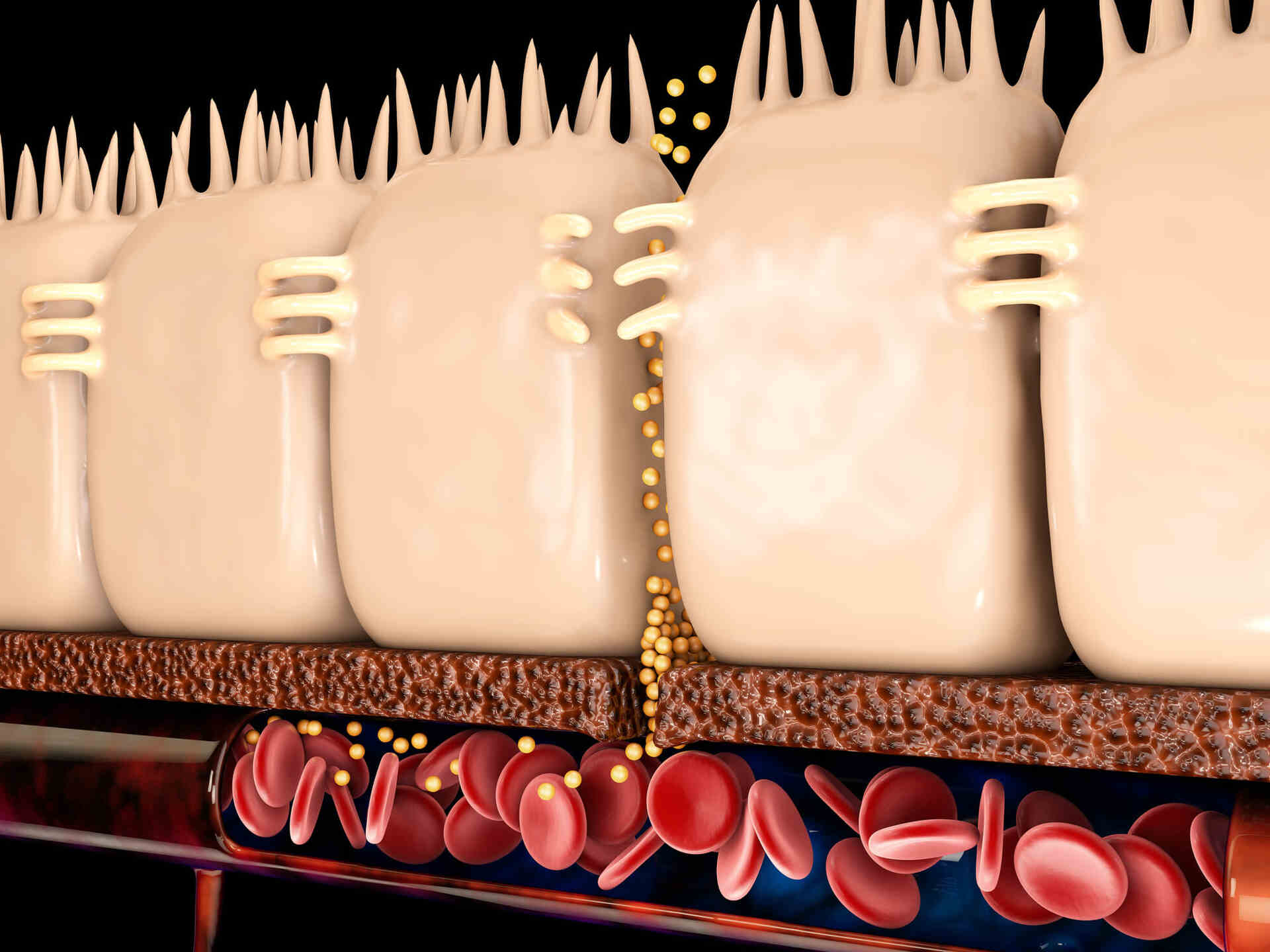
How does a leaky gut develop?
Leaky gut causes You will no doubt be aware that the gastrointestinal tract digests our food. After proper digestion, the intestinal wall absorbs this digested food into the bloodstream as nutrients. What is not so well-known is that the intestinal wall has a mucous membrane with intestinal cells. These cells are “glued” together through tight junctions. These structures are crucial for preventing unwanted substances from entering the bloodstream too early. When these tight junctions become damaged, a leaky gut develops and can trigger countless chronic health issues. In my practice, I see an unbelievable number of undiagnosed leaky gut cases—often overlooked by medical doctors.
If you want to learn more about how we evaluate these cases, you can read about our Multi-Dimensional Diagnostic Scan, which identifies underlying gut and immune dysfunction effectively.
A chronic working immune system depletes the adrenal glands. The immune system needs a lot of energy. Adrenaline, together with glycogen stored in the liver, flows into the blood. From this, the glucose is made that turns the immune system “on”.
Tight junctions
Tight junctions determine which nutrients may pass through the intestinal wall. Certain foods, medications, and early-life stress can damage these junctions. When this happens, toxins, bacteria, fungi, and partially digested food particles leak into the bloodstream. This repeatedly activates the immune system—this is how a leaky gut develops.
To understand how we repair this process, explore our Cell Stress Reset Program, which focuses on gut wall healing and immunological balance.
Poorly digested gluten, dairy, casein, and soy can do significant damage. These foods contain exorphins, which may later affect the brain. When combined with toxins and pathogens in the bloodstream, they can disrupt hormones and neurotransmitters. This can lead to depression and emotional imbalance. Many of my patients recover completely within weeks once we repair the gut and restore brain chemistry.
Exorphins
Exorphins can damage brain chemistry. Excess exorphins may cause depression, fatigue, brain fog, overstimulation, irritability, and emotional instability. If the microbiome becomes so damaged that it no longer produces DPP-IV enzymes, mental and emotional issues are guaranteed. Shockingly, most psychologists are unaware of the gut–brain relationship.
If the immune system stays constantly active because of these leaked substances, low-grade inflammation. (LGI) develops. This can evolve into autoimmune diseases, neuroinflammation, and long-term psychological problems.
Additional symptoms may include hives, poor memory, concentration issues, fatigue, mood swings, anxiety, hormonal disturbances, obesity, joint pain, and chronic fatigue syndrome.
Adrenal glands
A constantly activated immune system exhausts the adrenal glands. Cortisol normally shuts the immune system “off,” but chronic inflammation drains adrenal capacity. Many patients arrive with anxiety, high adrenaline, insomnia, and panic symptoms—all commonly linked to immune overactivation and adrenal fatigue.
Support for adrenal and hormonal balance is included in our Release & Recalibration Therapy, where we reset the system and bring chemistry back into regulation.
Insulin resistance can develop when glucose levels stay high from chronic inflammation. The cells become insulin-insensitive, which is a precursor to diabetes.
Visceral fats
Visceral fat develops from insulin resistance. When glucose can’t enter the cells, it accumulates as fat around the organs. This dangerous fat is linked to diabetes, Alzheimer’s disease (Type 3 Diabetes), obesity, and chronic inflammation.
Cravings for sugar and carbs are also common because the immune system demands glucose to stay active. This creates a cycle of overeating, weight gain, and exhaustion—all connected to leaky gut and inflammation..
Stay healthy
To stay healthy and prevent long-term symptoms, lifestyle improvements, stress reduction, a nutrient-rich diet, and repairing the gut lining are essential. Learn more about the gut microbiome…. and the gut–brain axis,… in our other guides.
Follow us on Facebook, Instagram, YouTube, and TikTok for updates, or register with your email.
If you need help, contact an epigenetic specialist….. or reach us through the contact form or live chat.

Leave a Reply